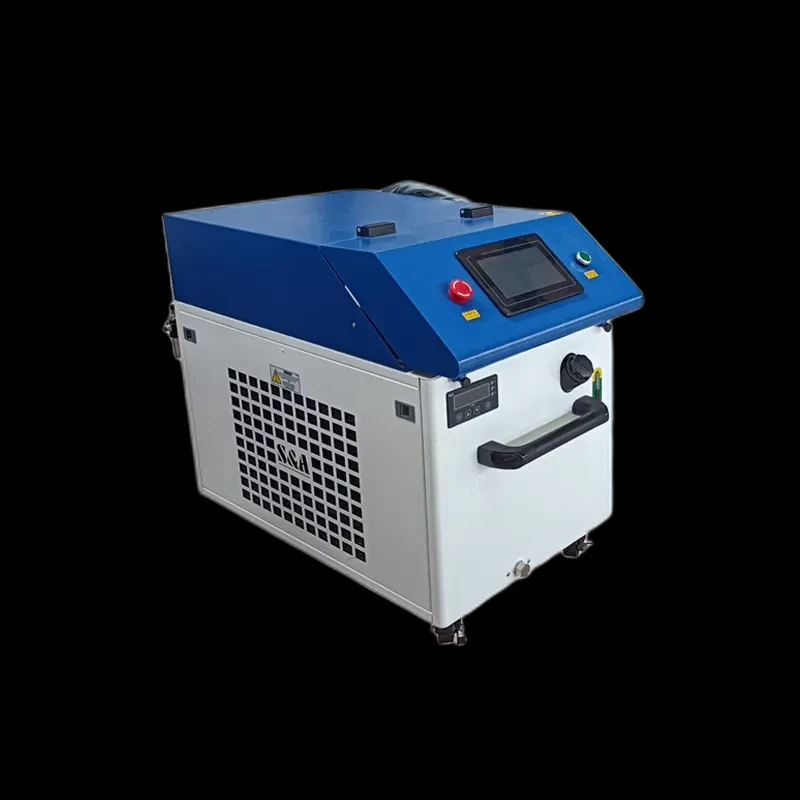
Laser Cleaner
Environmentally friendly removal of rust, paint, oxides and coatings without chemicals or abrasive. Non-contact laser cleaning that does not damage the substrate. Up to 70% faster than traditional methods.
Why laser cleaning?
A non-contact technology that replaces sandblasting, chemical pickling and grinding - with no waste and no damage.
Zero damage to the substrate
The laser beam is absorbed by the contamination and reflected by the metal. The base surface stays intact, even on delicate parts.
100% environmentally friendly
No chemicals, no abrasive, no waste to dispose of. The only "emission" is vaporised particles collected by the extraction unit. Meets the strictest environmental standards.
Up to 70% faster
Wide-scan head with a cleaning width of up to 200 mm. One operator with a laser replaces a sandblasting crew - no preparation and no clean-up.
Precise targeting
You can clean exactly the selected area. The rest of the surface stays untouched. Ideal for spot repairs and restoration.
Zero consumable costs
No consumables - no sand, chemicals or abrasive. The only cost is electricity. The laser source lasts up to 100,000 hours.
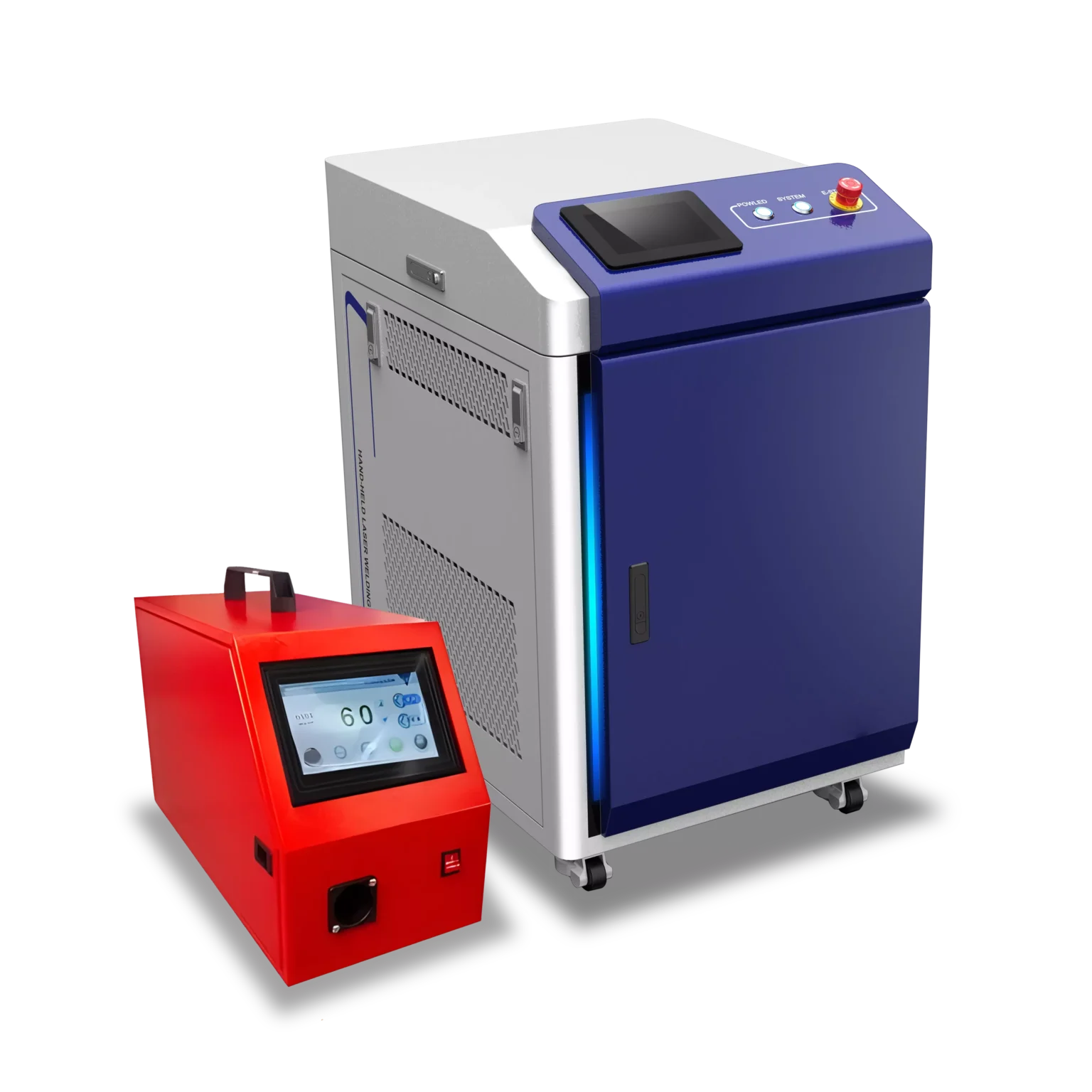
Touch control panel
Intuitive screen that stores up to 10 cleaning programmes. Adjust power, frequency and scan width - match the laser to the task in seconds.
Technical specification
| Parameter | Value |
|---|---|
| Wavelength | 1064 nm |
| Laser source | Fibre (pulsed MOPA or CW) |
| Power range | 100W / 200W / 300W / 500W (pulsed) | 1000W / 1500W / 2000W (CW) |
| Cleaning width | 10-200 mm (adjustable) |
| Laser source lifetime | up to 100,000 hours |
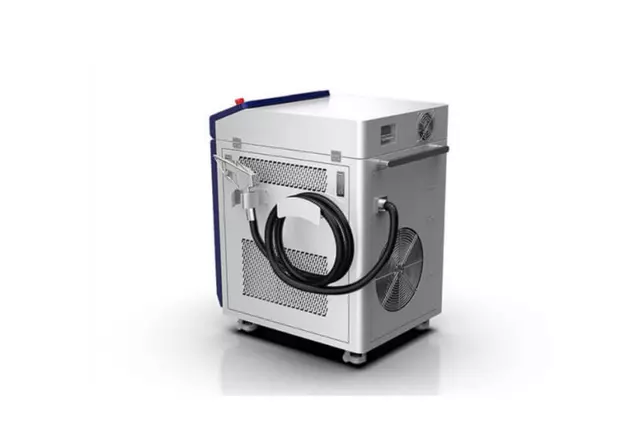
| Cooling system | Air cooling (up to 300W) / water chiller (500W+) |
| Fibre optic cable length | 10 m (option: 15 m) |
| Interface | Touch screen, 10 stored programmes |
| Temperature monitoring | Automatic, with alarm |
| Power supply | 220V / 50Hz (up to 500W) | 380V / 50Hz (1000W+) |
| Safety class | Class 4 |
Match the power to the task
We supply lasers from precise pulsed units to industrial continuous-wave ones. We will recommend the best option.
Gentle cleaning of moulds, tools and electronic components. Precise control, minimal heat input.
Removing rust, paint and coatings from machine parts and automotive components. The all-round choice.
Cleaning steel sheet, structures and frames. High throughput for mid-sized industry.
Heavy-duty work: ship hulls, pipelines, bridges, tanks. Maximum cleaning speed.
Laser cleaner applications
Rust and corrosion removal
Deep and surface rust, oxides, corrosion deposits. Returns the metal to a clean state without affecting the material structure.
Paint and coating removal
Stripping old lacquers, powder coatings and electroplated coatings without damaging the substrate. Ideal before applying new coatings.
Weld preparation
Cleaning zones before and after welding. Removing oxides, oils and contamination gives better weld quality.
Mould and casting cleaning
Precise removal of deposits from injection, casting and vulcanising moulds. Extends tool life without dismantling.
Restoration and conservation
Gentle cleaning of historic elements, architectural monuments and works of art. Controlled power does not damage the original structure.
Degreasing
Removing grease, oil and fatty contamination from precision parts before assembly, bonding or welding.
Laser cleaning in practice
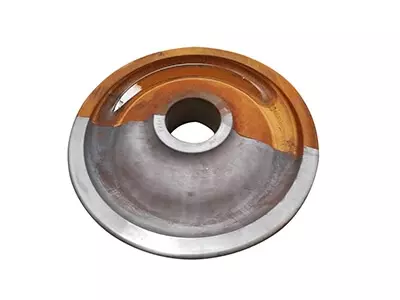
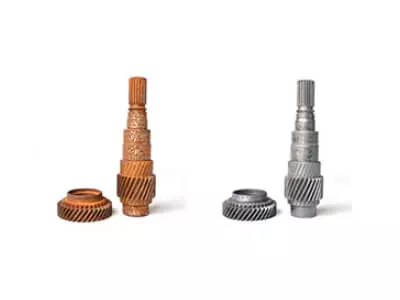
Rust removal with a laser
Removing rust from a metal surface in real time. No chemicals, no damage to the substrate.
How does laser cleaning work?
Laser beam
The laser emits a concentrated, high-energy beam of light directed at the contaminated surface.
Ablation
The contamination (rust, paint, oxides) absorbs the laser energy and vaporises. The metal reflects the beam - it is not damaged.
Extraction
Vaporised particles are collected by the extraction system. Zero solid waste, zero chemicals in the air.
Clean metal
The surface is ready for welding, painting or further processing. Clean, smooth and free of contamination.
Laser vs. traditional methods
Sandblasting, chemical pickling and grinding have serious drawbacks. The laser eliminates all of them.
| Parameter | Laser cleaner | Sandblasting | Chemical pickling | Grinding |
|---|---|---|---|---|
| Substrate damage | None | Yes (abrasion) | Possible | Yes (material removal) |
| Waste / emissions | Zero | High (dust) | Toxic | Medium (dust) |
| Consumables | None | Sand / corundum | Chemicals | Discs / abrasive paper |
| Precision / targeting | Very high | Low | Medium | Medium |
| Cleaning speed | Very high | Medium | Low (soaking) | Low |
| Preparation time | Immediate | Long (masking) | Long (baths) | Short |
| Environmental impact | Neutral | Negative | Very negative | Negative |
Where are laser cleaners used?
Automotive
Cleaning moulds and engine parts
Shipbuilding
Hulls, decks, structures
Energy
Pipelines, tanks, turbines
Heritage conservation
Restoring metal and stone
Safe and environmentally friendly
The laser cleaner is the only contamination removal method that generates no chemical waste and needs no consumables.
Protection systems
- Lens temperature monitoring - automatic alarm on overheating
- Emergency stop button - switches the laser off immediately
- Safety glasses - dedicated goggles included
- Extraction system - collects vaporised particles
- Safety interlock - protection against accidental start-up
Frequently asked questions
Does the laser damage the surface being cleaned?
Which laser power should I choose?
Which materials can be cleaned?
Are consumables needed?
Is the technology environmentally friendly?
How long does deployment take?
Ready for laser cleaning?
Contact us for an individual quote. We will match the power and configuration to your needs.