01
Cobot for palletising cartons
The easiest place to start is repetitive cartons with a known weight, dimensions and a stable way of being fed. Then the layer pattern, stack height, pallet type and required gripper can be assessed quickly.
Not every product and not every line is suitable for cobot palletising. On this page we have collected the criteria that decide: product weight and packaging, pace, stack height, space at the line and the operator’s way of working. We describe the ready-made cell separately, as the palletising kit.
Cell scope
This page explains when cobot palletising makes sense. If you want to see a specific cell - the kit contents, photos of a real deployment and the work cycle - go to the kit page.
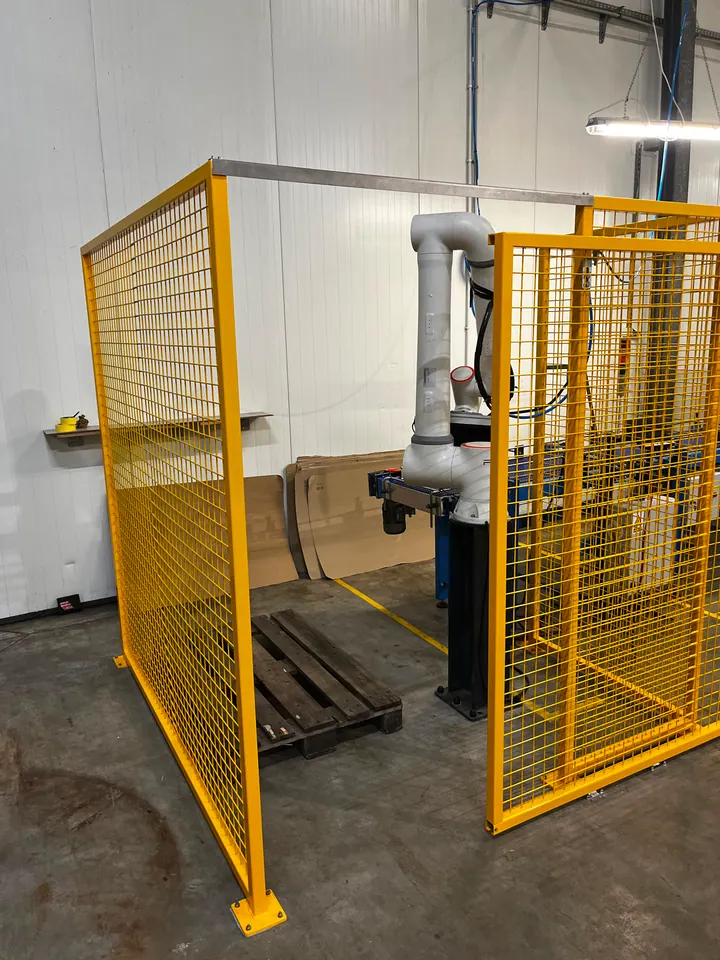
Selecting the cell is easier when we know the packaging, picking method, stack stability and space constraints at the line. This information shows whether a cobot is enough, which gripper will be suitable and how to plan the cell.
Data for the first assessment
The product and packaging that is to go onto the pallet
Weight and dimensions of a single item
Line pace and number of pieces per shift
Pallet dimensions, stack height and layer pattern
Space at the line, operator access and how the product is fed
Requirements for the gripper, safety and integration
We most often analyse the end of the line, where an operator stacks repetitive products onto a pallet by hand. A cobot works best when formats are repetitive and the cell can be prepared without rebuilding the whole production.
With unstable bags, soft packaging, slippery surfaces, high format variability or a very high pace, a more detailed assessment is needed. Sometimes the best answer is not a cobot alone, but a different feeding or gripping arrangement or fuller line automation.
That is why we do not give one throughput figure or price without a description of the product, line pace and working conditions. First the product has to be checked, then the cell selected.
First we assess the product, packaging and line pace. Only then can the gripper, pallet pattern, place-down point and scope of line integration be selected.
The easiest place to start is repetitive cartons with a known weight, dimensions and a stable way of being fed. Then the layer pattern, stack height, pallet type and required gripper can be assessed quickly.
With shrink packs, crates and containers, what matters is the stability of the packaging, the gripping surface and whether the product can be lifted by vacuum, clamped mechanically or handled with other equipment.
Bags and soft packaging have to be assessed on a sample. What matters is the fill, the shape after placing, the risk of the product shifting and whether the layer will remain stable after several cycles.
We do not start with the cobot model. First we check where the product appears at the end of the line, how much space there is for the pallet, how the operator moves and whether the cell can be fitted in without major rebuilding.
The throughput and scope of the cell depend on the product, packaging, line pace, available space and how the pallet is handled. This data has to be collected before selecting the cobot, gripper and safeguards.
Weight, dimensions, surface, packaging rigidity, tolerance to squeezing and the possibility of vacuum gripping.
Pieces per minute, number of shifts, breaks, format variability and whether the pace is constant or comes in surges.
Pallet type, stack height, number of layers, slip sheets, product rotations and the required load stability.
Operator access, space for the base, access to the pallet, work zones, collision risk and how the cell is operated.
How the product is fed, signals from the line, pick confirmation, removal of the full pallet and the response to a process stop.
Number of recipes, how often the product changes, who changes the format and how many operations remain with the operator.
Not every end of line needs the same layout. For some processes a compact cobot cell is enough, while for others robotic palletising or broader end-of-line automation will be better.
Works well with repetitive products, a moderate pace, limited space and work close to the operator. First we assess the product, gripper, pallet and feeding method.
May be a better choice with a very high pace, heavy loads, long reach, multiple discharge stations or full end-of-line automation. We make that decision after assessing the process.
Below are four decisions that have to be made for every palletising cell. We describe the exact delivery scope on the kit page.
See the kit contentsSelection starts with the product, pace and space at the line, not with the model name. For palletising, we recommend a complete cell built on the WS-20 cobot.
Gripper selection depends on the product, surface, weight, picking method and whether the packaging can be squeezed or lifted by vacuum.
The plugin simplifies setting up the pallet pattern, pick points, layers and basic motion parameters. The operator does not have to start by writing a program from scratch.
The deployment scope covers configuration, testing, commissioning and handing over the cell’s working rules to operators within the agreed process.
The palletising plugin shows that a Welderstal cell covers not only the cobot, but also tools that make day-to-day operation easier. Details of how the plugin works and its compatibility have to be confirmed for the specific kit.
Product pick and place points
Product and pallet dimensions
Number of layers and stack pattern
Safe travel heights
Basic motion parameters
Preparing the program for commissioning
We collect the product, weight, dimensions, pace, current palletising method and space constraints at the line.
We check whether a cobot cell is enough at the given location, which gripper will be suitable and where the limits of the layout are.
We prepare the concept: cobot, gripper, plugin, integration, safety, operator work and the next deployment steps.
Once the scope is accepted, we configure the cell, test the process and show operators how to work with the finished setup.
The videos show how the plugin works and what the cell's operation can look like. After watching, it is best to send a description of your own process, because every line has different constraints. The videos are narrated in Polish.
More videos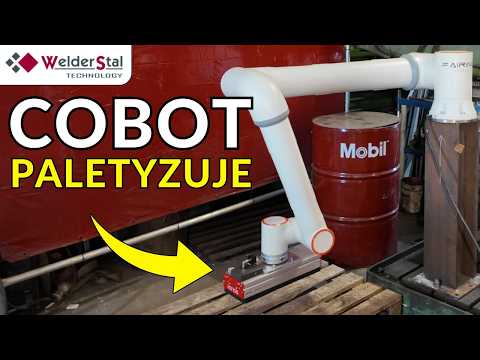
The main video showing the role of the palletising plugin in the Welderstal kit.
Open the video
Technical material for those checking the motion logic and programming method.
Open the videoThe WS-20 is a cobot: a Fairino FR20 arm with equipment, plugin and deployment. The palletising kit is the whole cell built on that cobot - with a gripper matched to the product, a concept for the pick and place locations and integration into the line.
No. The weight, shape, packaging stability, line pace, picking method and space at the line have to be checked. For some processes another industrial solution or a broader line rebuild will be better.
On the cobot, gripper, safeguards, line integration, number of formats, expected pace, product tests and commissioning scope. That is why a process assessment is needed first.
To start: a product description, weight, dimensions, line pace, pallet type, stack height and how the product is currently fed. We will arrange a photo or video of the process by email or phone.
Not always. Sometimes it is enough to plan the pick, place and pallet handling locations well. For some processes, however, a change to product feeding, pallet removal or the organisation of the operator’s work is needed.
That is the purpose of the palletising plugin: to simplify working with formats, layers and process points. The scope of changes available to the operator, however, has to be agreed for the specific cell configuration.
A palletising cobot works where a compact cell, work close to the operator and a moderate line pace matter. A classic palletising robot or a larger automated line may be a better direction with a very high pace, heavy loads, long reach or full end-of-line automation. That is why the choice of solution should be based on the product, pace, space and feeding method.
Describe the product, weight, dimensions, line pace and pallet type. On that basis we can assess whether the best direction is the WS-20, another model, another gripper or a broader automation concept.