Palletising and end of line
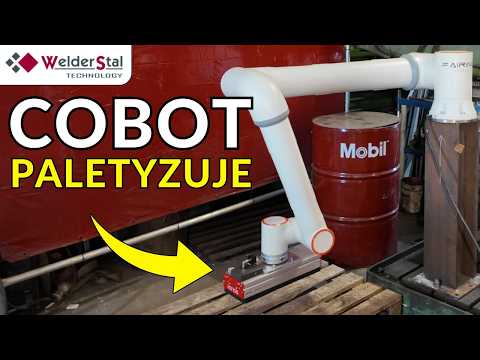
Stacking cartons, shrink packs, crates and products in layers. The longest reach in the family covers a tall stack without repositioning the pallet. See the palletising cell.
Welderstal kit
WS-20
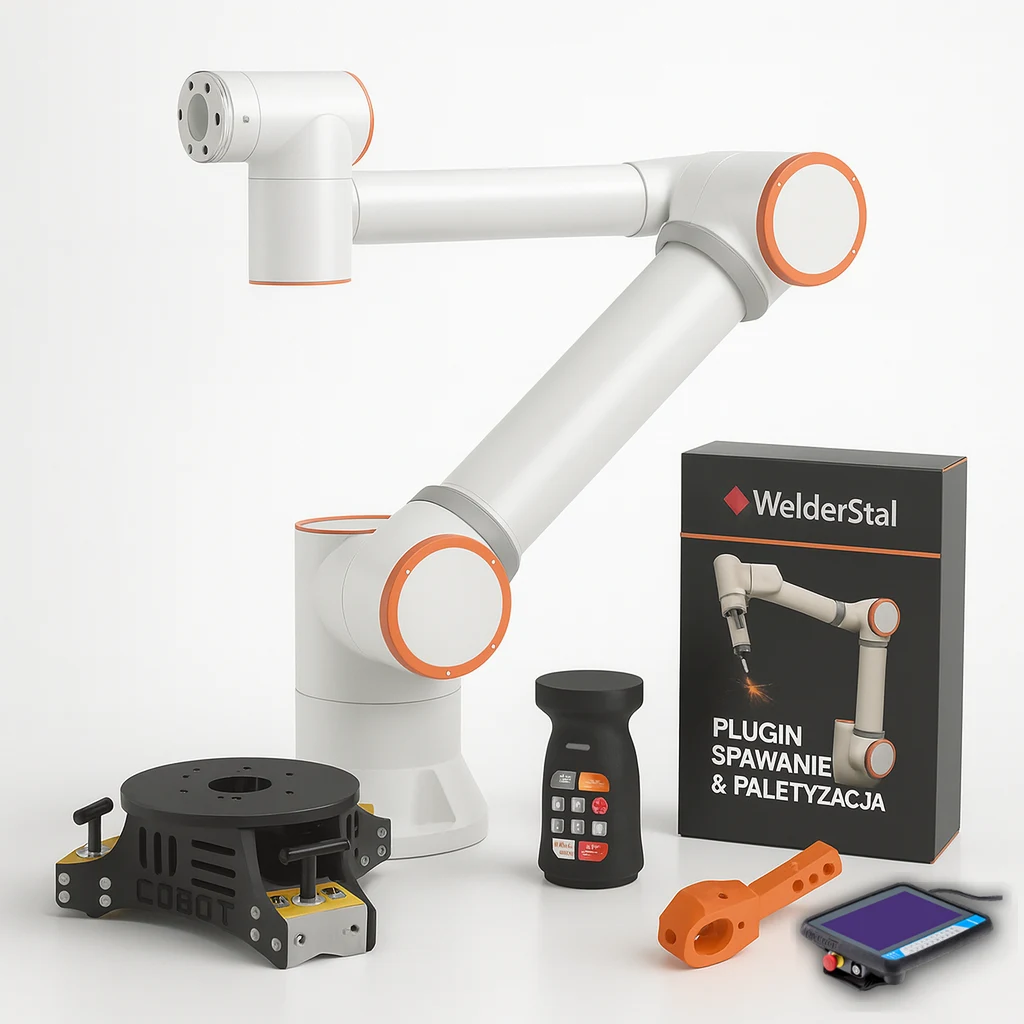
The WELDERSTAL WS-20 is a ready-to-work cobot built on the bare Fairino FR20 cobot arm (20 kg payload, 1854 mm reach - the longest in the family, ±0.1 mm repeatability, 6 axes). A base for palletising, end-of-line work and large structures. The WS model adds the gripper or torch, equipment, the Welderstal palletising plugin, configuration, commissioning, training and support.
See what a welding cobot as a ready-made WS cell consists of.
The WELDERSTAL WS-20 is a ready-to-work cobot built on the bare Fairino FR20 cobot arm. The FR20 arm on its own is a technical base with 20 kg payload, 1854 mm reach (the longest in the family), ±0.1 mm repeatability and 6 axes. It is the base most often chosen for palletising and large structures.
The WS model adds to the arm: the working tool (gripper or torch), cell equipment, the Welderstal palletising plugin, process configuration, safety assessment, commissioning, operator training and support after start-up.
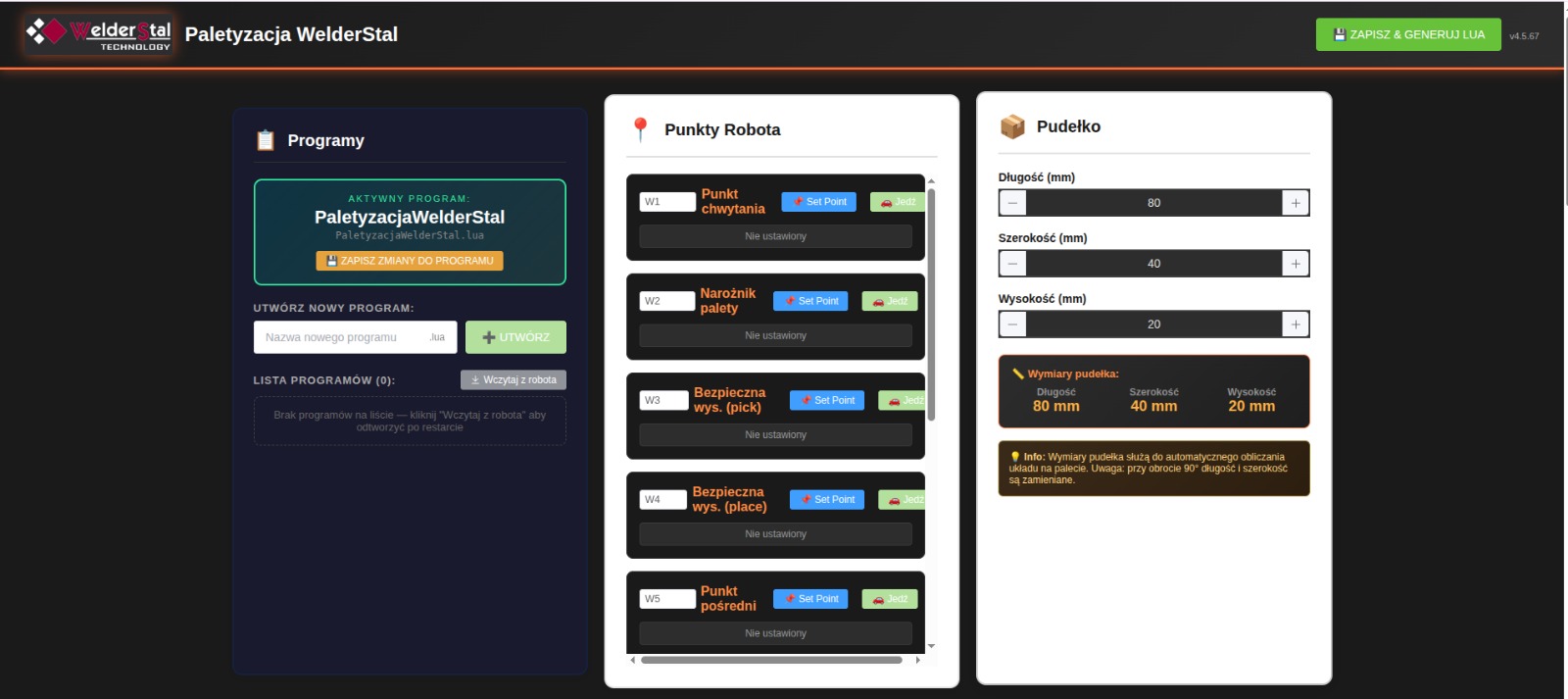
The WS-20 is the typical base for palletising automation. The palletising plugin makes the operator’s job easier: they work with product, pallet, layer and point parameters instead of programming the cell from scratch.
We select the model after analysing the process - the product, packaging, pace, pallet height and space at the line. Start with a process description. See also the palletising kit, palletising, all WS cobots and the WS-16 and WS-30 models.
You are not buying just the Fairino FR20 cobot arm. Our specialists analyse the cell and put together the complete WS cobot - from the tool and plugins to commissioning, training and support after start-up.
Technical base
The WELDERSTAL WS-20 cobot is built on the Fairino FR20 arm - 20 kg payload, 1854 mm reach.
See the Fairino FR20 arm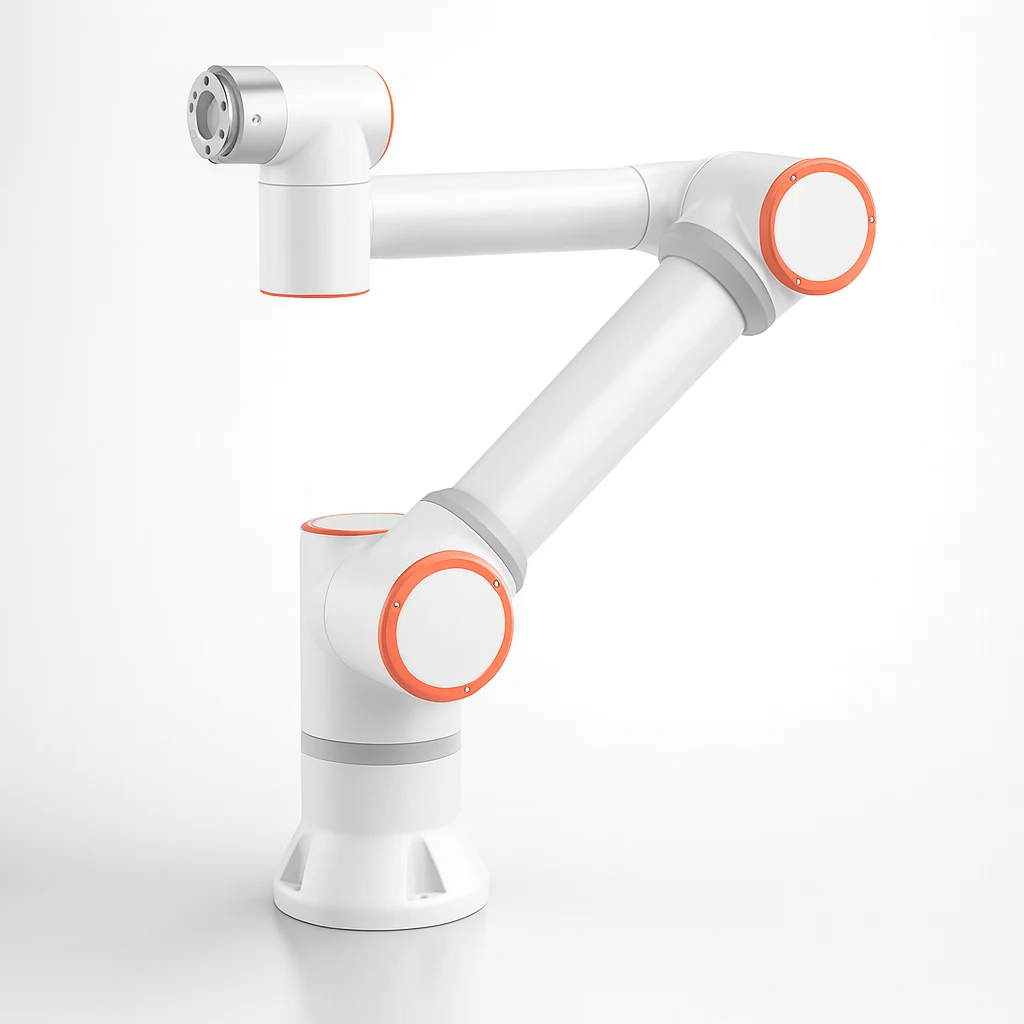
20 kg payload, 1854 mm reach, 6 axes. The technical base of the kit.

Quick mounting of the cobot on a steel table or part. With longer arms the PIN 28 system is used instead.

Touch control panel with an emergency button for programming and operating the cobot.

Torch angle adjustment from -60° to +60° without reprogramming the path. Matched to the weld in a few seconds.

A wrist-mounted handle with buttons. The operator saves points and starts the program without reaching for the pendant.
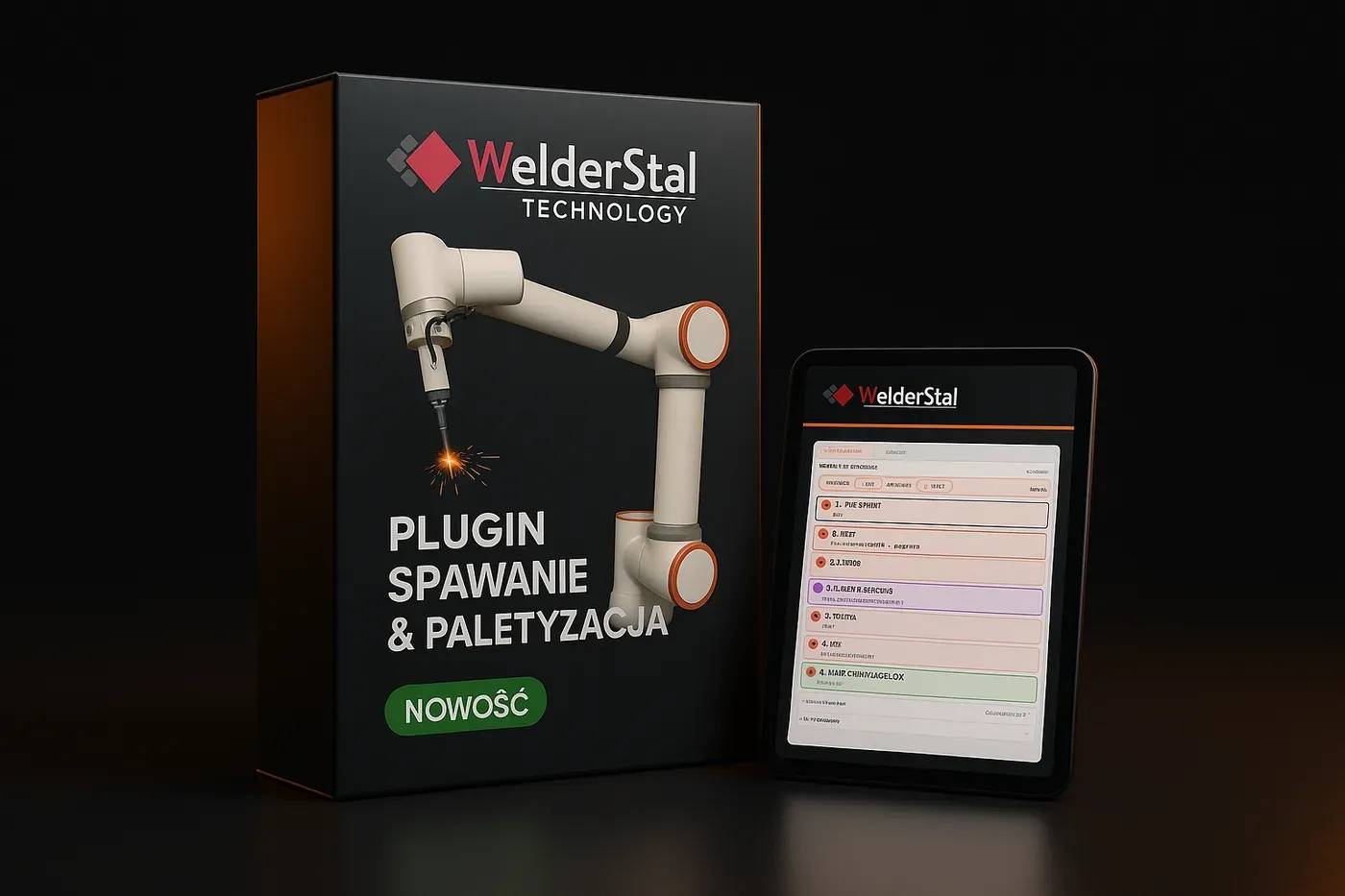
Weld sequences, points and arc parameters in the operator’s language. The code is generated in the background.
Paths, parameters and working logic set up for your part, product and cell pace.
Operation, changeovers and programming new parts. The operator works independently from day one.
Technical contact, materials, the forum and help with further parts.
The most common tasks this cobot handles well. We confirm the final scope after a process analysis.
Stacking cartons, shrink packs, crates and products in layers. The longest reach in the family covers a tall stack without repositioning the pallet. See the palletising cell.
Welding and handling large components - frames, trailers, machine parts - where reach and payload matter.
Working with single- and two-axis positioners makes it possible to process parts with complex geometry and circumferential welds once the equipment is selected.
Plugins are the difference between a bare arm and a ready-made cell. The operator works with prepared points and parameters, and a changeover does not start with programming from scratch.
See the pluginsWe match equipment to the process: welding torch holders and torches, grippers, suction cups, fixtures, tables and positioners. Accessories are selected together with the model, not separately.
The best way is to see the cell at work. Below are clips from commissioning and cobot welding - you will find more in the videos section. The videos are narrated in Polish.
Parameters of the base Fairino FR20 arm. You will find the full datasheet of all FR models on the Fairino arms page.
A cobot is an arm with equipment, ready to work. A kit goes a step further: it adds a process tool, an external axis or line equipment and becomes a complete cell.
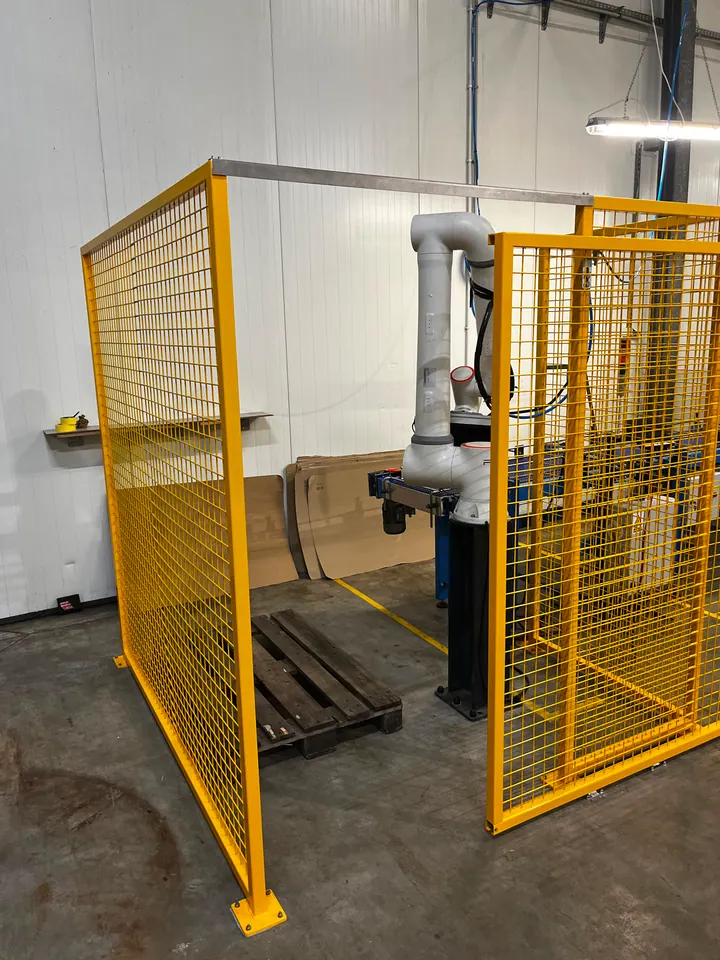
Stacking cartons, bags and containers from the end of the line onto a pallet.
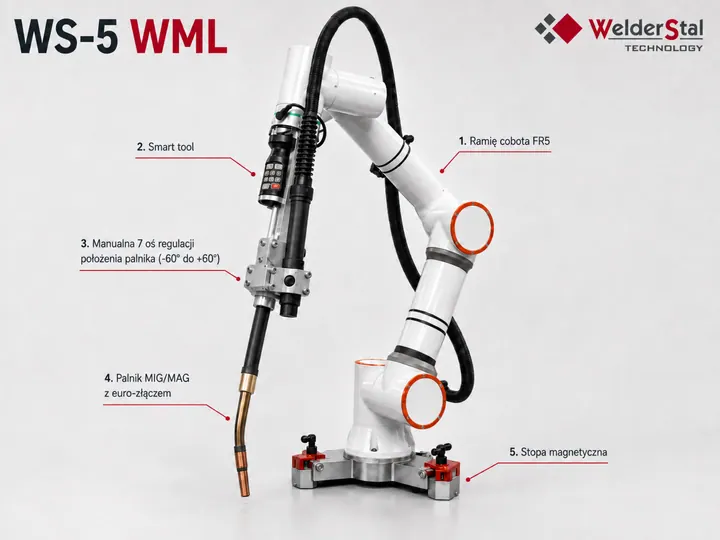
Repeatable parts that fit within the arm’s working envelope.
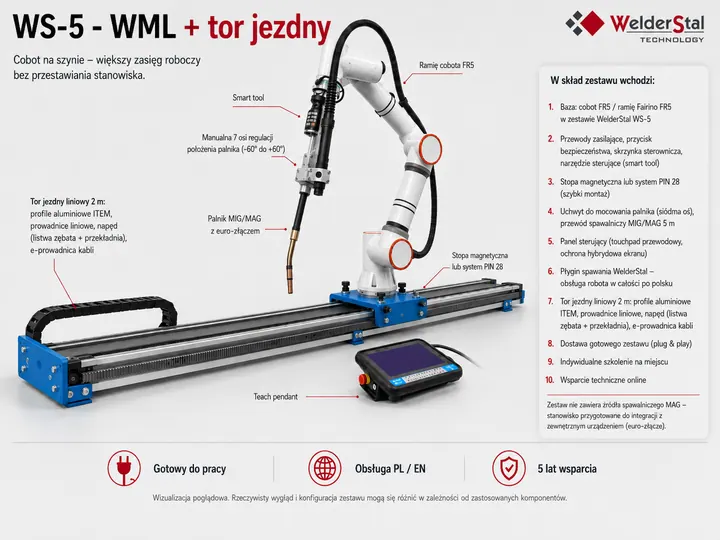
Long structures or several workstations in one line.
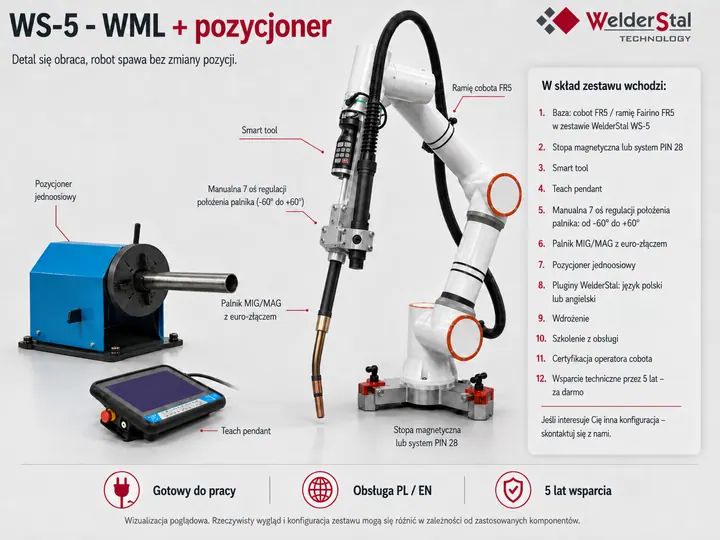
Circumferential welds on pipes, sleeves and shafts.
The Fairino FR arm is a collaborative robot - it has joint sensors and force limiting. Whether the cell can work without guarding, however, depends on assessing the whole: tool, part, speed, forces and surroundings. We carry out this assessment before commissioning.
For companies taxed in Poland, buying and deploying a cobot may qualify for the robotisation tax relief. See the rules and what the deduction covers.
Each WS cobot is built on a different Fairino FR arm - they differ in payload and reach.
Describe the part, process, pace and space at the cell. On this basis we will select the model, tool, plugins and deployment scope.